Saturday, May 30, 2009

WHAT WILL CHANGE EVERYTHING?

  Every year, edge.org posts a new question to a group of diverse group of thinkers - scientists, artists, philosophers etc.  In exchange for getting to plug their books, they contribute paragraphs and essays relating their take on the answer to the question posed.

Previous questions were:
WHAT HAVE YOU CHANGED YOUR MIND ABOUT? WHY?
WHAT ARE YOU OPTIMISTIC ABOUT?
WHAT IS YOUR DANGEROUS IDEA?


This year's question is: WHAT WILL CHANGE EVERYTHING?

Here are a few quick highlights:

GREGORY PAUL (Independent Researcher; Author, Dinosaurs of the Air) talks about giving our brains an upgrade:

The human brain and the mind it generates have not undergone a major upgrade since the Pleistocene. And they violate the basic safety rule of information processing — that it is necessary to back up the data. Something more sophisticated and redundant is required. With computing power doubling every year or two cheap personal computers should match the raw processing power of the human brain in a couple of decades, and then leave it in the dust.

If so, it should be possible to use alternative, technological means to produce conscious thought. Efforts are already underway to replace damaged brain parts such as the hippocampus with hypercomputer implants. If and when the initial medical imperative is met, elective implants will undoubtedly be used to upgrade normal brain operations. As the fast evolving devices improve they will begin to outperform the original brain, it will make less and less sense to continue to do one's thinking in the old biological clunker, and formerly human minds will become entirely artificial as they move into ultra sophisticated, dispersed robot systems.


Personally I would love a more accurate memory system, one with complete recall, or shall I say Total Recall. I think if we were to then add on some wireless networking capabilities to our brain, we would really step things up.  If you like this idea... here's another article on intelligence enhancement: NICK BOSTROM (Philosopher, University of Oxford; Editor, Human Enhancement) on SUPERINTELLIGENCE.


In another response, MARC D. HAUSER (Psychologist and Biologist, Harvard University: Author, Moral Minds) talks about imagining the impossible he describes a field of study called:

theoretical
morphology, a discipline that aims to map out the space of possible morphologies
and in so doing, reveal not only why some parts of this space were never
explored, but also why they never could be explored.

I love this kind of brain challenge... Try to think of something that is impossible.  Maybe with our new enhanced brains we'll be able to actually pull that one off.

There's many more thought provoking articles in the complete book/web post so go check them out!

Sunday, May 10, 2009

Super Brain

I've been digging through the Principia Cybernetica Web some more.. and found this interesting article about the emergence of the "Global Brain".


They describe recent tech revolution

"has produced a global communication network, which can be seen as a nervous system for this planetary being. As the computer network becomes more intelligent it starts to look more like a global brain or super-brain, with capabilities far surpassing those of individual people ...

 A remaining question is whether this transition will lead to the integration of the whole of humanity, producing a human "super-being", or merely enhance the capabilities of individuals, thus producing a multitude of "meta-beings".

This reminds me of the enemy in Orson Scott Cards Sci Fi novel - Ender's Game.  As of now, we're still functioning largely as individuals, as far as I can tell, but the tools available to put the web to enhance our own capabilities really are developing quickly.  If you haven't had the chance yet, make sure to check out Stephen Wolfram's new "Alpha"
Here's som more info on it.

and here's a video from Wolfram:


Saturday, May 09, 2009

Get a world view

I've been googling grandiose questions lately... things like "meaning of life" and "world view" thinking google might by chance spit back an answer like in The Hitchhikers Guide:


Unfortunately, that hasn't happened yet... But I did stumble accross this interesting little gem of an article that enlightened me to Belgian philosopher Leo Apostel and his short book entitled "World views, from fragmentation to integration"

In it, the authors make an attempt to initiate an

international forum that may generate a multiplicity of
provisional and evolving world views, allowing ultimately the continuation of growth and
the synthesis of fact and value, of explanation and meaning to be realized.

Because...
Within the scientific world, large-scale movements tending towards unification seem powerless
confronted with the information explosion of research and historicism in the philosophy of
science. Outside of science, we notice also that both religious and secular ideologies claiming
to energize mass movements have collapsed

I like the idea that we can collect various systems of thought to help assemble our world view.  With the emergence of sites like Ted.com, Bigthink.com and edge.org I feal that we are moving towards a greater intermixing of our ideas but the mass of information currently available can also feal overwhelming. 

Here is the Principia Cybernetica Project attempt at a wolrd view ... what's yours?


Tuesday, April 28, 2009

The Kurzweil Gospel

Ray Kurzweil, inventor and futurist has two new movies coming out about him and or by him.

The first played at the 2009 Tribeca Film Festival and is called Transcendent Man:
Here's the trailer:


The second is called "The Singularity is Near - The Movie"  featuring Tony Robbins, Alan Dershowitz and Marvin Minsky, amongst others.  Maybe these films will be the next "What the Bleeps"?! hopefully without all of the secret ploys to get us to join some weird religion.


Friday, April 03, 2009

395 Babies were just born in India.

Dig this video about the exponential growth of everything:


And then you can watch this...  Ray Kurzweil, inventor and futurist, breaks down some of his crazy and not so crazy ideas.. My favorite part is when he references Bono!


Sunday, March 01, 2009

Evolution by Intelligent Design


Evolution by Intelligent Design


So I guess we're very close to altering our own genetic makeup now. Thanks to the work of scientist like Mario Capecchi of the University of Utah, Sir Martin Evans of Cardiff University in Wales, and Oliver Smithies of the University of North Carolina.

They proved in 2007 with their Nobel Prize–winning work on mice, that it's possible to alter the genetic makeup of newborn mice, by turning on and off genes through selectively adding or deleting stretches of DNA in the (artificially) fertilized cell. Scientists could knock out genes for a disease like diabetes or insert genes coding for extra height or intelligence.

We are getting into Kurzweil / Gattaga / Brave New World Territory now. I wonder if in our lifetimes, say the next 50 years, we will have to face questions about whether or not to give our children intelligence enhancing chromosomes.

Sunday, December 07, 2008

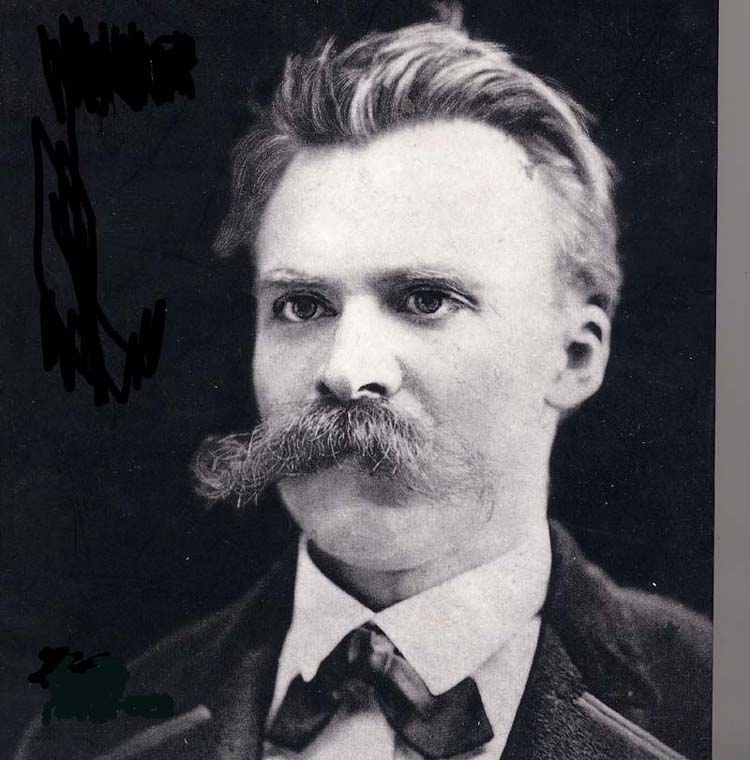
Kierkegaard and Nietzsche


Here's a a thought provoking article on some of the similarities between Kierkegaard and Nietzsche and their views on the individual and his perpetual becoming. Through passion, man perpetually yearns for something more than himself.. In Kierkegaard it is something religious.. in Nietzsche, it is to become the superman through the will to power.

Saturday, October 04, 2008

Great Philosophy Resource


Found a great resource to help get an overview on philosophy: http://www.sparknotes.com/philosophy/

It's a great resource for other topics of study too.

Tuesday, July 29, 2008

Warp Drive


Wow, the idea of traveling faster than light has been portrayed in many a sci-fi movie and tv show... Now, the chance of that becoming a reality just got a little closer.

Sunday, July 29, 2007

Evolutionary Algorithms surpass human math

The next step in math involves evolutionary algorithms that use brute force to solve problems. This idea is similar to Stephen Wolfram's "New Kind of Science" http://www.wolframscience.com/...whereby a simple rule can breed a complex system. What this sometimes breeds is a proof that has been proven by a computer but unexplainable by humans. ie: the four color theorem: http://en.wikipedia.org/wiki/Four_color_theorem